


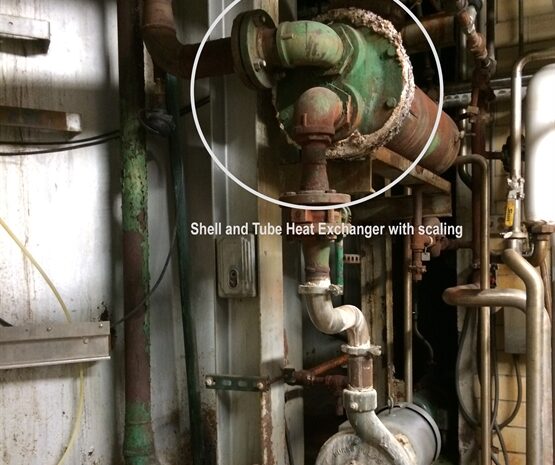
Indirect Heat Exchanger
Introduction
Indirect Heat Exchanger is a device that transfers heat between two or more fluids without them coming into direct contact. It uses a solid barrier, such as metal plates or tubes, to separate the fluids while allowing heat to transfer efficiently. This method of heat exchange is crucial in industries where contamination is a concern, such as food processing, pharmaceuticals, power plants, chemical industries, HVAC systems, and refrigeration. Indirect heat exchangers enhance energy efficiency, reduce waste, and improve thermal performance in industrial and commercial applications. Unlike direct-contact heat exchangers, they maintain the purity of fluids and ensure consistent heat transfer performance. This technology is a key component of various thermal management systems, offering cost savings, reliability, and environmental benefits.
How Indirect Heat Exchangers Work
Indirect heat exchangers operate on the principle of thermal conduction. One fluid (hot fluid) flows through a series of tubes, plates, or coils, while the other fluid (cold fluid) flows on the opposite side of the heat transfer surface. The thermal energy from the hot fluid passes through the solid wall and is absorbed by the cold fluid without mixing. Heat exchangers are designed to maximize heat transfer efficiency using advanced materials such as stainless steel, copper, aluminum, and titanium, which have high thermal conductivity. The efficiency of an indirect heat exchanger depends on several factors, including temperature difference, flow rate, heat exchanger design, and material selection.
Key Features of Indirect Heat Exchangers
No Direct Fluid Contact
-
-
Ensures fluid separation, preventing contamination.
-
Essential for applications requiring hygienic processing, such as food, dairy, and pharmaceutical industries.
-
High Thermal Efficiency
-
-
Uses conductive materials to enhance heat transfer.
-
Incorporates design features such as baffles, extended surfaces, and finned tubes to improve heat exchange.
-
Energy Conservation
-
-
Recovers and reuses heat in industrial processes, reducing energy consumption.
-
Helps industries lower operational costs and carbon footprint.
-
Wide Industrial Applications
-
-
Used in industries such as chemical processing, HVAC, refrigeration, oil & gas, power generation, and marine engineering.
-
Provides efficient cooling and heating solutions in various processes.
-
Minimal Maintenance Requirements
-
-
Reduces fouling, corrosion, and scaling since fluids do not mix.
-
Easier to clean and maintain compared to direct-contact systems.
-
Customizable Configurations
-
-
Available in shell and tube, plate, finned tube, and coil designs.
-
Can be tailored to specific temperature, pressure, and space constraints.
-
Types of Indirect Heat Exchangers
Shell and Tube Heat Exchanger
-
Most common type used in power plants, oil refineries, and chemical industries.
-
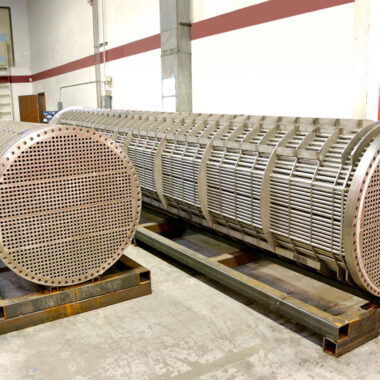
Consists of multiple tubes inside a cylindrical shell, with one fluid flowing inside the tubes and another around them.
-
Suitable for high-pressure and high-temperature applications.
Plate Heat Exchanger
-
Features stacked metal plates with alternating fluid flows for efficient heat transfer.
-
Compact, lightweight, and highly efficient.
-
Commonly used in HVAC systems, food processing, and refrigeration applications.
Finned Tube Heat Exchanger
-
Incorporates extended surfaces (fins) to increase the heat transfer area.
-
Used in air heating, industrial drying, and cooling systems.
-
Ideal for low-temperature heat exchange applications.
Coil Heat Exchanger
-
Uses coiled tubing to optimize space utilization and efficiency.
-
Found in solar heating, boilers, and automotive heat exchangers.
-
Provides rapid heating and cooling capabilities.
Advantages of Indirect Heat Exchangers
Prevents Cross-Contamination: Ideal for industries requiring strict hygiene and sterilization.
Energy Efficiency: Reduces waste heat loss, improving thermal performance.
Corrosion Resistance: Built with durable stainless steel, titanium, and copper alloys.
Versatile Applications: Used in steam heating, refrigeration, wastewater treatment, and chemical processing.
Sustainable Operations: Supports waste heat recovery and eco-friendly industrial processes.
Conclusion
Indirect heat exchangers are essential thermal management solutions used across multiple industries. Their ability to prevent direct fluid mixing, improve efficiency, and reduce contamination risks makes them a preferred choice for energy-efficient processes. With advancements in heat exchanger design, industries can benefit from enhanced performance, reliability, and cost savings. As businesses focus on sustainability and energy conservation, indirect heat exchangers will continue to play a vital role in modern industrial applications.
hello world March 19, 2026 at 12:10 pm
hello world
hello world
metoprolol medicine March 20, 2026 at 6:19 am
metoprolol medicine
metoprolol medicine
azithromycin eye drops March 27, 2026 at 8:47 am
azithromycin eye drops
azithromycin eye drops
mirtazapine 15 mg tablet for dogs March 31, 2026 at 11:13 am
mirtazapine 15 mg tablet for dogs
mirtazapine 15 mg tablet for dogs
lasix furosemide April 15, 2026 at 12:13 am
lasix furosemide
lasix furosemide
orlistat cholesterol April 28, 2026 at 1:25 pm
orlistat cholesterol
orlistat cholesterol
topamax dose for headaches May 16, 2026 at 4:00 am
topamax dose for headaches
topamax dose for headaches
rogaine shampoo reddit May 18, 2026 at 3:20 pm
rogaine shampoo reddit
rogaine shampoo reddit
cialis dosage daily May 29, 2026 at 5:55 pm
cialis dosage daily
cialis dosage daily
bupropion xl (wellbutrin xl) May 31, 2026 at 6:16 pm
bupropion xl (wellbutrin xl)
bupropion xl (wellbutrin xl)
saxenda pen bangkok June 03, 2026 at 9:36 pm
saxenda pen bangkok
saxenda pen bangkok
ketoconazole action overview June 20, 2026 at 10:06 pm
ketoconazole action overview
ketoconazole action overview
toradol pain treatment guide June 22, 2026 at 10:34 am
toradol pain treatment guide
toradol pain treatment guide
ivermectin kinetic analysis June 27, 2026 at 11:53 am
ivermectin kinetic analysis
ivermectin kinetic analysis
minoxidil onset timeline July 01, 2026 at 1:07 am
minoxidil onset timeline
minoxidil onset timeline
minoxidil pk systemic exposure July 01, 2026 at 3:07 pm
minoxidil pk systemic exposure
minoxidil pk systemic exposure
avanafil health condition contraindications July 24, 2026 at 4:49 am
avanafil health condition contraindications
avanafil health condition contraindications
vardenafil cautionary guidance July 27, 2026 at 7:44 pm
vardenafil cautionary guidance
vardenafil cautionary guidance
penicillin allergy medical summary August 05, 2026 at 10:30 pm
penicillin allergy medical summary
penicillin allergy medical summary